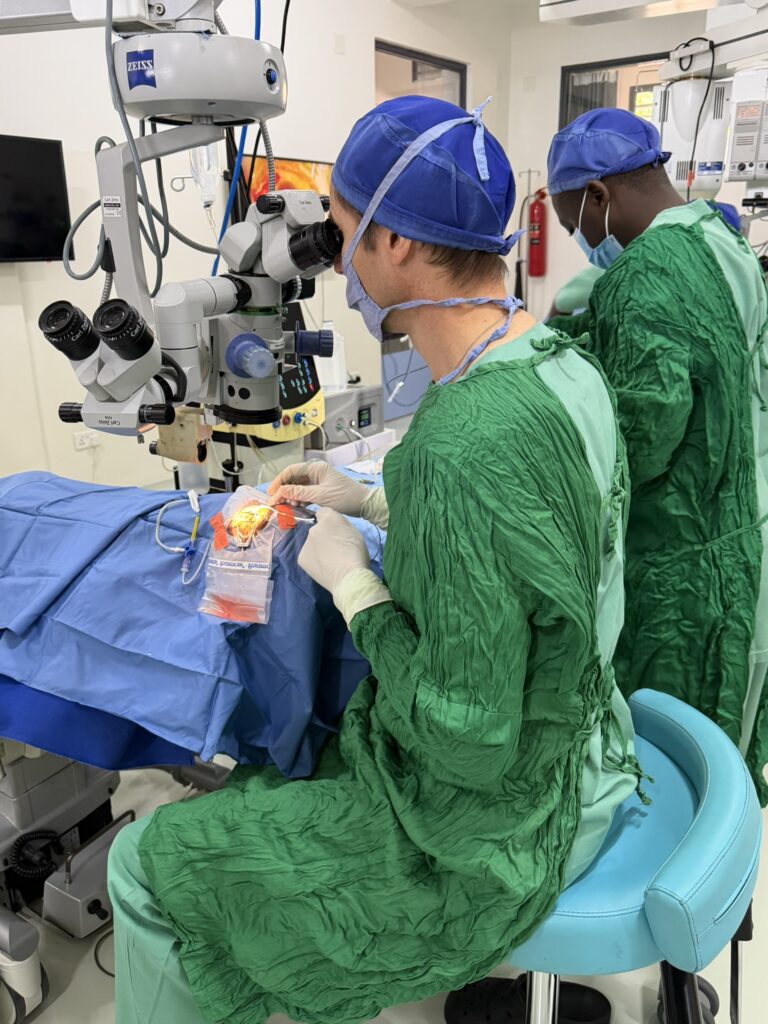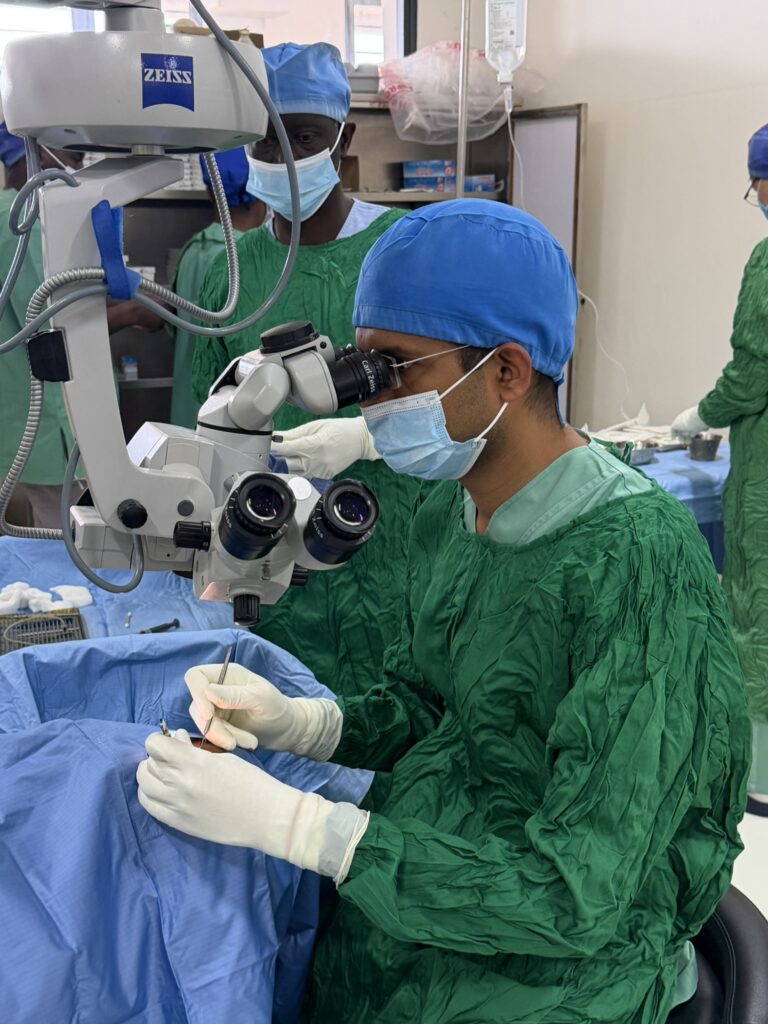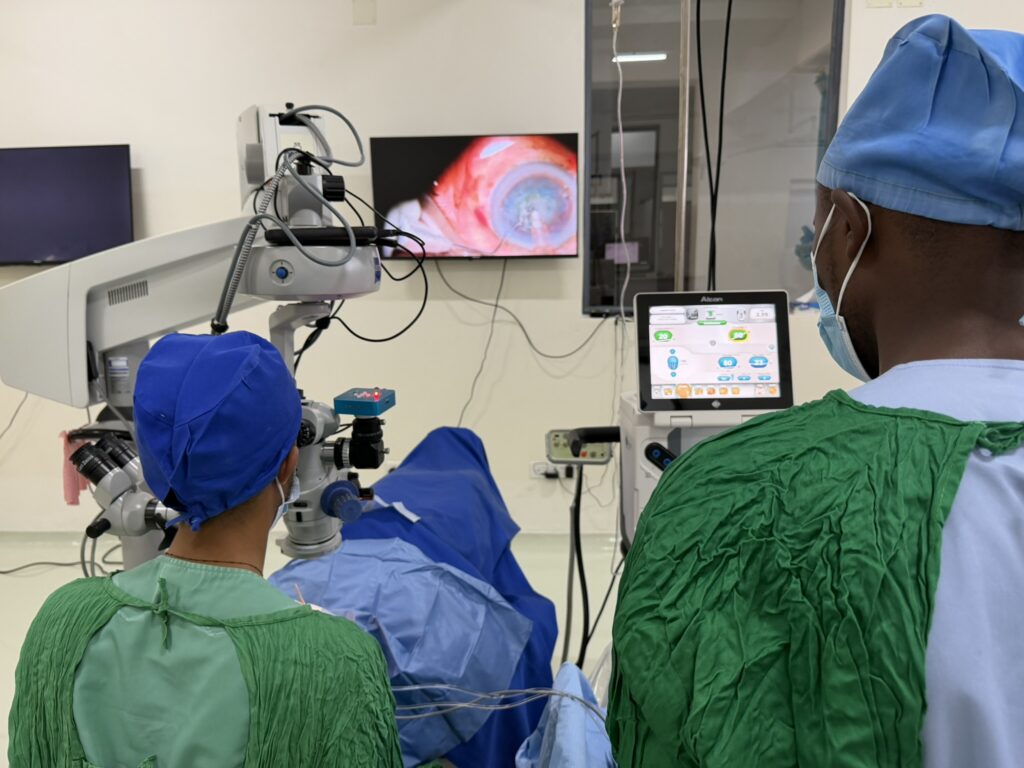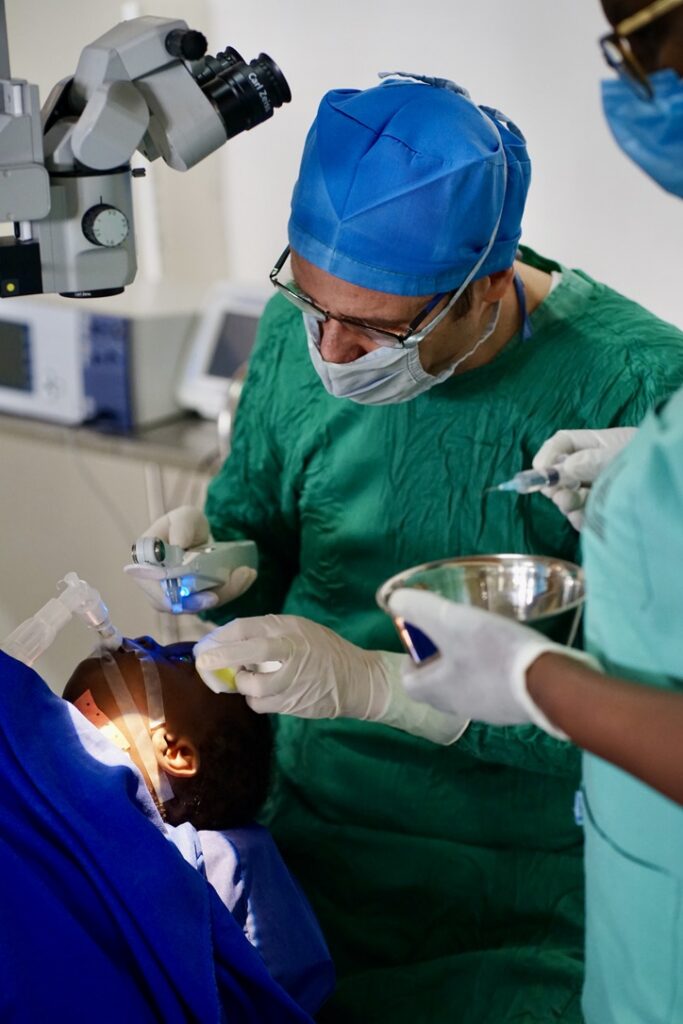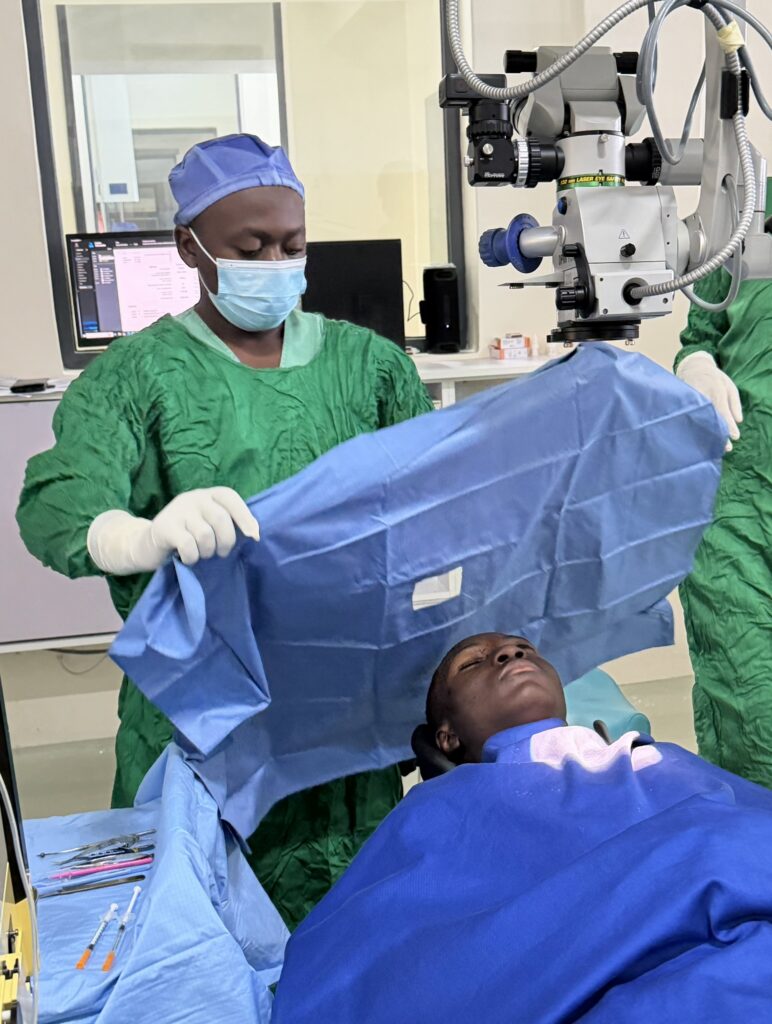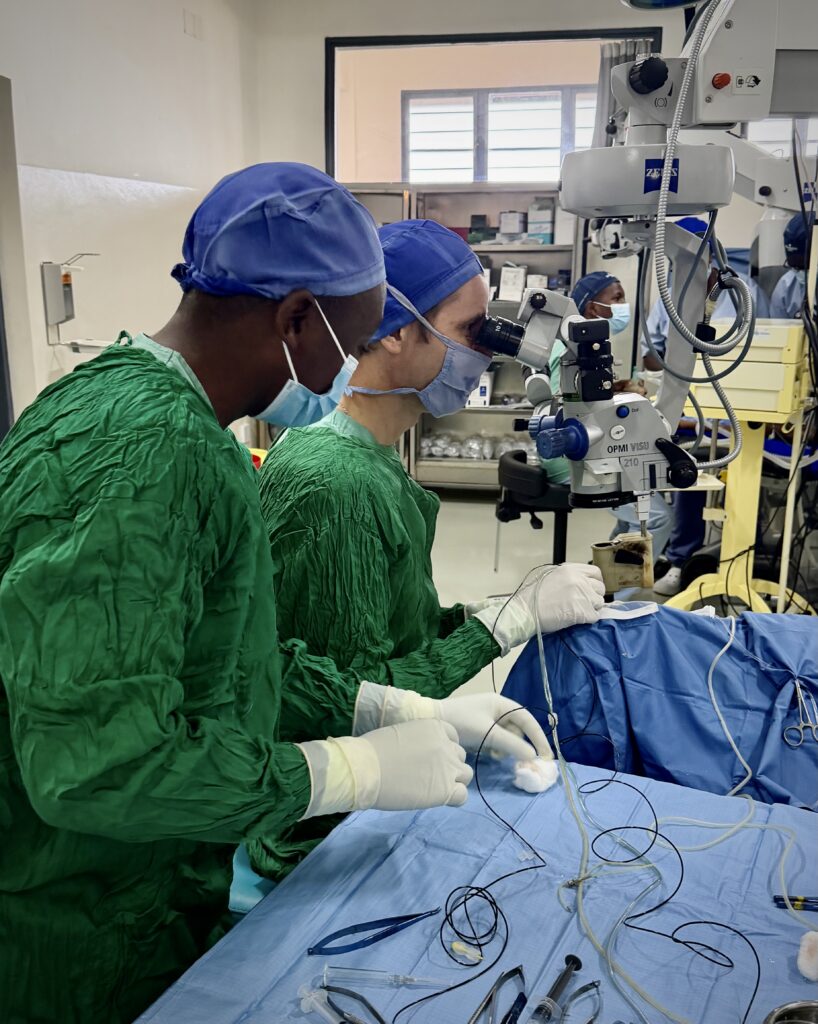
Cataract: almost all cataract surgeries at RCEH are done with phacoemulsification, which is the techique used in the western world using ultrasonic energy, and a very small incision. In case your cataract is very dense and hard, we will perform MSICS which is a technique which uses a larger incision.
- monofocal aspheric hydrophobic intraocular lenses (IOL) are the standard implant. It still needs reading glasses after surgery.
- the latest extended depth of focus (EDOF) IOLs are implanted in persons who want to be spectacle free after surgery, and who do not want reading glasses.
Glaucoma: We do trabeculectomies, trabeculotomies (paediatric glaucoma), glaucoma drainage devices (AADI), cyclophotocoagulation.
Retina: retina surgery (posterior vitrectomy) is needed for people with retinal detachments, advanced diabetic retinopathy, and after a severe eye trauma, but also in patients with macular holes and epiretinal membranes. Silicone oil or gas might be left in the eye after surgery.
Eyelids and orbit (oculoplasty): ptosis corrections, ectropion and entropion corrections, eyelid reconstructions, lacrimal surgery, blepharoplasty, removal of orbital tumours
Cornea:
- Corneal crosslinking for patients with keratoconus.
- DALK, deep anterior lamellar keratoplasty
- PKP, penetrating keratoplasty
- DSAEK, descemet stripping automated endothelial keratoplasty
- DMEK, descemet membrane endothelial keratoplasty
Laser treatments
- for patients with secondary cataracts (Yag laser), diabetic retinopathy (pattern laser via Pascal Laser, diode laser) and certain types of glaucoma (Yag laser and SLT)
- Refractive laser treatment (PRK) will be available from March 2026.
Paediatric Eye Surgeries: congenital cataract and congenital glaucoma, strabismus and trauma.
Eye Cancer treatment: retinolastoma is treated with systemic and local chemotherapy and local treatments such as laser and cryotherapy.